OWN THE FUTURE · SEASON 1 · TECHNOLOGICAL BREAKTHROUGH
What is AI? Explained from the ground up
Artificial intelligence is computer programs that work out their own answers, usually by learning patterns from examples. Here we explain what the technology does today, where it is used and what the words mean.
Published 24 Aug 2026 · About 8 minutes to read
In 2025 the Swedish Internet Foundation asked Swedes why they do not use AI tools.9 More than half the population had not done so.9 The answers were strikingly concrete: they do not know what AI tools are, they do not know how to get started, they do not know what they would use them for, and they do not know how it differs from googling.9
For many, it is a gap in explanation rather than a lack of interest. This article fills part of it.
What the word actually means
The word is from 1955
AI stands for artificial intelligence. The term is old. As far as is known, it was first used in a research proposal dated 31 August 1955, written by John McCarthy, Marvin Minsky, Nathaniel Rochester and Claude Shannon.6 They proposed a two-month study in the summer of 1956 at Dartmouth College in the United States.6
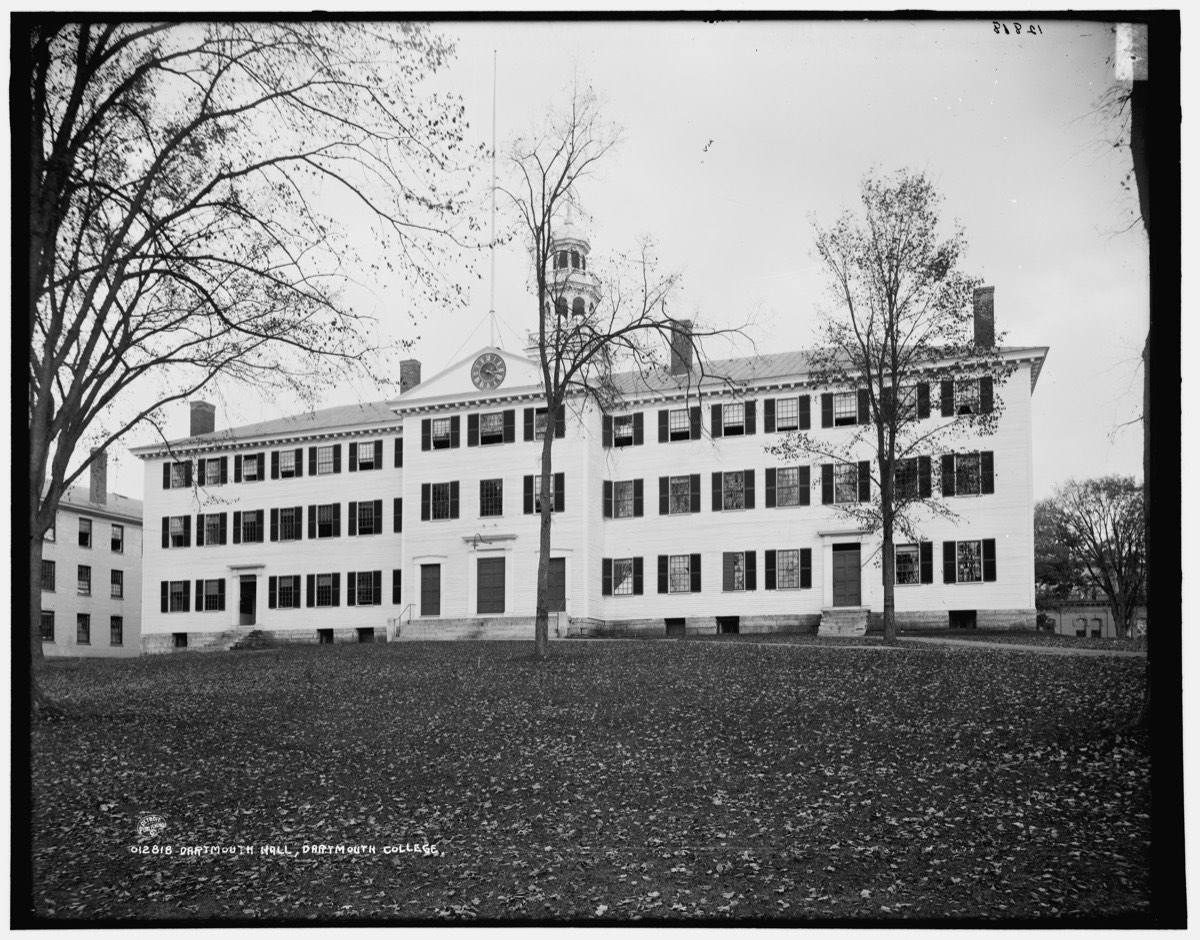
Their starting point was a guess, and they were open about it: that every aspect of learning, or any other feature of intelligence, can in principle be described so precisely that a machine can be made to simulate it.6 The working definition of the problem itself, as one of them put it in a letter to the participants shortly afterwards, was simpler still. To make a machine behave in ways that would be called intelligent if a human behaved that way.6
The definition that applies today
Seventy years later there is a much drier definition, and it is worth reading slowly. In November 2023 the OECD member countries adopted a definition whose core reads like this:1, 17
An AI system is a machine-based system that, for explicit or implicit objectives, infers, from the input it receives, how to generate outputs such as predictions, content, recommendations, or decisions that can influence physical or virtual environments.1
A closely matching definition is used in the EU AI Act.3 It sounds bureaucratic. But it contains a single word that makes all the difference.
The word that carries the definition. An AI system infers how input should become output. That can happen through learned patterns or through conclusions drawn from encoded knowledge and logic.
The one word that matters: infers
Rules against inferred patterns
An ordinary computer program does what it is told. A person has written the rules, and the program follows them. A spreadsheet that adds up a column follows a rule. A booking system that shows you free times follows rules. They are advanced, sometimes enormously advanced, but they do not come up with the rules themselves.
An AI system infers its answers. It works out for itself how input should become output. That can happen in different ways. The legal definition covers both machine learning and systems that draw conclusions from encoded knowledge and logic.3, 11 The method that dominates today is machine learning, and it is easiest to understand through an example.
A machine learning system is given examples and works out a pattern for itself, which it then applies to new material it has never seen. Nobody has written a rule that says "a cat has pointed ears". The system has been shown a very large number of pictures and worked out what usually marks a cat.
Schematic sketch of machine learning, the method that dominates today. After the OECD definition of AI systems, 2023.
Where the law draws the line
That dividing line is not academic, it is legal. The EU AI Act states explicitly that the definition does not cover systems based solely on rules set by people to carry out operations automatically.3 And the Commission's guidelines list what falls outside: mathematical optimisation, basic data processing, classical heuristics, simple prediction systems.11 So some of what is sold as AI in everyday life is not AI even according to the law.
So the next time something is marketed as AI, it is reasonable to ask whether the system infers something or follows rules someone has written.
Why now, and not 1985
The idea is from 1955.6 The breakthrough came later, when computing power, amounts of data and capital grew at the same time.
The scale is hard to take in, so here it is in numbers. In 2012 the AlexNet model required an estimated 470 petaFLOP of training computation.12, 13 The original Transformer model in 2017 required about 7,400 petaFLOP.12 GPT-4o is estimated to have required 38 billion petaFLOP.12 That is the same measure, three times, over twelve years.
The amounts of data followed. In 2017 the Transformer model was trained on about 2 billion tokens, that is, pieces of text.12 GPT-3 was trained on an estimated 374 billion.12 Llama 3.3 was trained on about 15 trillion.12 According to researchers at Epoch AI, compiled in Stanford's AI Index 2025, the computing power used to train notable models doubles roughly every five months, and the training data for language models roughly every eight.12, 13
Here is the figure that explains why AI is suddenly in your phone and not just in a research lab. Querying a model that performs at GPT-3.5 level on a standard knowledge test cost, according to Stanford's compilation, about 20 dollars per million pieces of text in November 2022.12 In October 2024 it cost 0.07 dollars.12 That is a price cut of more than 280 times.12
cheaper to run a model at GPT-3.5 level, November 2022 to October 2024.
Source: Stanford HAI, AI Index Report 2025Technology becomes common when it becomes cheap, not when it becomes impressive.
An example that cannot be explained away
AI is often described with promises. A safer basis is something that has already happened and has already been scrutinised.
Half of the 2024 Nobel Prize in Chemistry went to David Baker for computational protein design, and the other half jointly to Demis Hassabis and John Jumper for protein structure prediction.8, 14
Proteins are built from amino acids in long chains that fold into a three-dimensional shape, and it is the shape that decides what the protein does. Working out the shape from the amino acid sequence was a problem researchers struggled with for more than fifty years.8, 15 In the CASP competition, predictions had at best reached about 40% accuracy.8 The first version of the AI model AlphaFold reached nearly 60%.8 It won the competition and was not enough.8
The next version, AlphaFold2, was presented in 2020 and was built on a transformer architecture, the same kind of technology behind today's language models.8, 14, 15 With it, researchers have been able to predict the structure of practically all of the roughly 200 million proteins that have been identified.8 By October 2024 the model had been used by more than two million people in 190 countries.8 What could once take years, if it succeeded at all, now takes minutes.8
protein structures predicted with AlphaFold2. By October 2024 the model had been used by more than two million people in 190 countries.
Source: Nobelprize.org, Royal Swedish Academy of Sciences 2024The model also calculates how reliable different parts of the prediction are.15 In other words it reports its own uncertainty, which says more about good technology than the accuracy itself.
This is how it looks in Sweden
The Swedish Internet Foundation's survey Svenskarna och internet 2025 (Swedes and the internet 2025) gives the figures we have at home. 4 in 10 Swedes aged 8 and over used AI tools in 2025.9 People born in the 2000s, aged 15 to 25, dominate: nearly twice as many of them use AI as the population average.9 Among children and young people aged 8 to 19, 57% use AI tools, twenty percentage points more than adults aged 20 or older.9
Swedes aged 8 and over used AI tools in 2025. Among people born in the 2000s, nearly twice as many as the average.
Source: Swedish Internet Foundation, Svenskarna och internet 2025 (Swedes and the internet 2025)Behaviour is shifting too. Just over one in five Swedes now ask an AI tool questions they could otherwise google.9 Among those who use AI, it is just over half.9
At the same time, more than half the population is still outside, and some of the worry is well founded: that AI makes up answers, what is usually called hallucinating, and that the answers come without sources.9 That is a real feature of the technology to deal with, not a misunderstanding to correct. A system that infers patterns can infer wrongly, and it sounds just as confident when it does.
AI is now regulated by law
One last thing that belongs to the basics. AI is no longer an unregulated area in Europe. The EU AI Act was published on 12 July 2024 and entered into force on 1 August 2024.3 The rules began to apply in stages: the bans on certain uses of AI from 2 February 2025, the rules for general-purpose AI models from 2 August 2025, and the transparency rules from 2 August 2026.3, 5 Among other things, the rules mean that certain AI systems must tell you that you are dealing with AI, and that certain kinds of AI-generated or manipulated content must be labelled.3, 5
The timetable for the so-called high-risk systems was changed in the summer of 2026 by an amending regulation, and the rules now begin to apply on 2 December 2027 for stand-alone systems and on 2 August 2028 for systems built into products.5, 10 What the rules require of a high-risk system is a subject of its own that deserves to be done properly.
What to take away
AI is systems that infer how input becomes output, usually from patterns in data. The idea was put into words in 1955, and four in ten Swedes aged 8 and over used AI tools in 2025, 57% among children and young people aged 8 to 19.6, 9 The structural point is that the technology became common when it became cheap: the same question to a model at GPT-3.5 level cost 20 dollars per million pieces of text in November 2022 and 0.07 dollars in October 2024.12 That the method solves real problems has been shown after the fact, through the 2024 Nobel Prize in Chemistry.8, 14 Follow the Swedish Internet Foundation's Svenskarna och internet, Stanford's AI Index with the Epoch AI database, and the high-risk system dates of 2 December 2027 and 2 August 2028.9, 10, 12, 13
Education, not advice.
The fund
Behind the library stands a fund.
Own The Future is published by AIX. The library is the knowledge; AIX Dynamic is the tool, a systematic securities fund (UCITS) that follows the trend and steps aside when risk rises.
This is marketing. Fund units can both rise and fall in value. Read the key information document (KID) and the prospectus before you invest; you will find them on the fund's page at Avanza.
34 UNITHOLDERS · AS OF 15 SEP 2026The future in your inbox.
The most important things from each area, without the noise and without the hype.
Sources
- OECD, Recommendation of the Council on Artificial Intelligence, the definition of AI system revised on 8 Nov 2023.
- OECD, Explanatory memorandum on the updated OECD definition of an AI system, 2024.
- European Union, Regulation (EU) 2024/1689 (the AI Act), Article 3 and recital 12.
- European Commission, AI Act Service Desk: Article 3 with the Commission's guidelines on the definition of AI systems, 2025.
- Swedish Post and Telecom Authority (Post- och telestyrelsen), AI-förordningen (the AI Act), dates of application.
- McCarthy, Minsky, Rochester and Shannon, A Proposal for the Dartmouth Summer Research Project on Artificial Intelligence, 31 Aug 1955.
- Stanford HAI, Artificial Intelligence Index Report 2025, chapter 1, with underlying data from Epoch AI.
- Nobelprize.org and the Royal Swedish Academy of Sciences (Kungliga Vetenskapsakademien), the 2024 Nobel Prize in Chemistry.
- Swedish Internet Foundation (Internetstiftelsen), Svenskarna och internet 2025 (Swedes and the internet 2025), the chapter on AI. The survey company's Study 1, n=3,362, fieldwork period 2 to 20 Jan 2025.
- European Union, Europaparlamentets och rådets förordning (EU) 2026/1744 av den 8 juli 2026 om ändring av förordningarna (EU) 2024/1689, (EU) 2018/1139 och (EU) 2023/1230 vad gäller förenkling av genomförandet av harmoniserade regler för artificiell intelligens (Regulation (EU) 2026/1744 amending the AI Act to simplify its implementation, Swedish language version), OJ 24.7.2026, via EUR-Lex. Supports that Article 113 of the AI Act has been amended, that Chapter III Sections 1 to 3 apply from 2 December 2027 for systems that are high-risk under Article 6(2) and Annex III and from 2 August 2028 for systems that are high-risk under Article 6(1) and Annex I, and that for reasons of urgency the amending regulation entered into force on the third day after publication.
- European Commission, Kommissionens riktlinjer om definitionen av ett system för artificiell intelligens enligt förordning (EU) 2024/1689 (AI-förordningen) (Commission guidelines on the definition of an AI system under the AI Act), C(2025) 5053 final, 29 Jul 2025, Swedish language version. Supports the four categories the article lists under the heading of systems not covered by the definition of AI systems, and that the list is conditional and not exhaustive.
- Stanford HAI, Artificial Intelligence Index Report 2025, the full report as a PDF, 457 pages. Supports 470 petaFLOP for AlexNet, about 7,400 petaFLOP for the original Transformer model, 38 billion petaFLOP for GPT-4o, 2 billion, 374 billion and 15 trillion tokens, the doubling every five and every eight months respectively, and the price fall from 20.00 to 0.07 dollars per million tokens.
- Epoch AI, Data on AI Models, the database behind the report's figures, updated 11 Sep 2026. Supports that the computation and data figures come from its own database of notable models and that the underlying research is Epoch AI's, which the article itself states.
- Royal Swedish Academy of Sciences (Kungl. Vetenskapsakademien), Nobelpriset i kemi 2024 (The Nobel Prize in Chemistry 2024), press release 9 Oct 2024, Swedish language version. Supports the division of the prize and the official Swedish citations, which read "för datorbaserad proteindesign" (for computational protein design) and "för proteinstrukturprediktion" (for protein structure prediction), and that the model was presented in 2020.
- Jumper et al., Highly accurate protein structure prediction with AlphaFold, Nature 596, 2021, via NIH PubMed Central. Supports that the model gives detailed estimates of its own reliability for each amino acid, which is the article's sentence about different parts of the prediction, that the architecture is built on attention blocks of the transformer type, and that the problem had been open for more than fifty years.
- Swedish Internet Foundation (Internetstiftelsen), Metodbeskrivning, Svenskarna och internet 2025 (Method description, Swedes and the internet 2025). Supports that the sample is n=3,362, that the fieldwork period for Study 1 was 2 to 20 Jan 2025, the 60% participation rate and the weighting against Statistics Sweden (SCB) data.
- OECD, Explanatory memorandum on the updated OECD definition of an AI system, OECD Artificial Intelligence Papers No. 8, March 2024, as a PDF. Supports the exact wording of the updated definition, that it replaced the 2019 wording, and that the member countries approved the revision in November 2023.
Links retrieved 23 Aug 2026.
Extended on 14 Sep 2026 with the report behind Stanford's compilation and the database the figures come from, the Commission's guidelines on the definition, the 2026 amending regulation that moved the high-risk dates, the Swedish prize citation, the original article on the protein model, the survey's method description and the OECD's explanatory memorandum as a PDF. The basis for the Swedish figures is n=3,362 with a fieldwork period of 2 to 20 Jan 2025, not n=3,302 and January to March. The list of computation and data figures comes from the Epoch AI database and is reproduced in Stanford's report.