OWN THE FUTURE · SEASON 5 · EMERGING GLOBAL WEALTH
What is an account, and who does not have one?
Most people in Sweden take a bank account for granted, but not everyone in the world has one. We explain what an account is, what it is used for and who is left out.
Published 10 Sep 2026 · About 8 minutes to read
Your wages come into it. Your rent goes out of it. Your card is linked to it, and so is Swish, the Swedish mobile payment app. A bank account is the point that almost all the money in an adult life passes through, and that is exactly why few people think about what it is, or about what happens to someone who does not have one.
The article starts with what a payment account is in the words of the law, and then moves to what the Swedish Financial Supervisory Authority has counted: how many people are refused an account in Sweden and how many accounts are closed. Finally Sweden stands next to the world, where the account has been the big change of the past fifteen years.
What a payment account is, according to the law
The account and the basic features
In the episode on payments (S5:E1), the money in your account was described as a number at your bank, and a payment as an instruction to change that number. A payment account is the number the instructions are aimed at, and the law sets out what you must be able to do with it.7
Since 1 June 2017, consumers who live in Sweden, or anywhere else in the European Economic Area (EEA), have had the right to open a payment account with basic features at a Swedish bank.3, 7, 8 The rules implement an EU directive from 2014, the Payment Accounts Directive.9 The basic features are listed in the law itself: being able to open, hold and close the account, to pay in money, to withdraw cash from a cash machine or over the counter within the EEA, and to make payments within the EEA by debit card, direct debit and transfers at a terminal, over the counter and through the bank's online services.7, 8
When the bank may refuse, and which banks are covered
The bank must decide on an application as soon as possible and at the latest within ten banking days of receiving a complete application.7 The right does not apply if an account would break the anti-money laundering law, or if there are special reasons, for example that the account can be assumed to be used for illegal purposes.7, 8, 10 Anyone refused must be told in writing, can turn to the bank's complaints officer and can take the matter to the National Board for Consumer Disputes.2, 7
On 7 December 2022 the Swedish Parliament decided to extend the right so that, from 1 January 2023, it also applies to branches of foreign credit institutions in Sweden.4, 11 In the government bill, which the Committee on Finance backed, the government notes that someone without access to a payment account with basic features ends up excluded, and that access is therefore crucial for taking part in society.4, 11
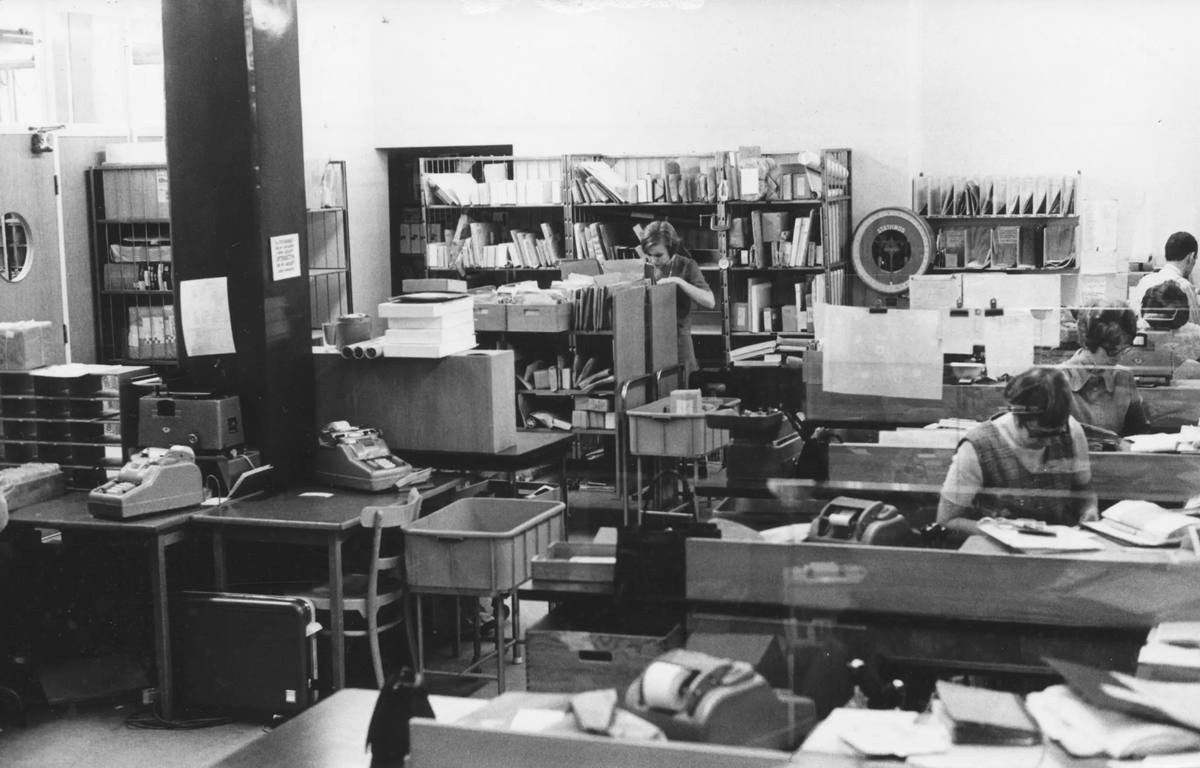
How many are refused in Sweden?
The Swedish Financial Supervisory Authority, which checks that the banks follow the rules, was asked by the government in 2023 to report on how its supervision works.1 The report came on 15 December 2023 and is based on a survey in which the authority asked a number of banks about the years 2020 to 2022.1
The first finding is that statistics are missing.1 Several banks could not say how many people had been refused an account during the first two years, and the authority writes that it is therefore hard to judge the exact number.1 Based on the banks' answers, the authority estimates that a few thousand account applications from consumers are refused each year, at a fairly constant level over 2020 to 2022.1 The authority adds that even if that may seem few, the consequence for each individual is often serious, because not having a payment account makes everyday tasks difficult.1
By far the most common reason for refusing an account, according to the banks, is insufficient knowledge of the customer, something every bank in the survey mentions.1 It can be about difficulty verifying the customer's identity, for example because the customer has no approved ID document, or about the customer having given incomplete details that were not completed despite reminders.1 Five banks also mention past misconduct, and several mention suspected money laundering.1
Accounts that are closed: 45,000, 54,000, 60,000
The figures and the most common reason
The second finding concerns the accounts that already exist. The number of payment accounts closed on the bank's initiative has risen: about 45,000 accounts in 2020, 54,000 in 2021 and 60,000 in 2022, according to the authority's survey.1 That is a rise of about 30% in two years.1 The figures cover all payment accounts the bank has closed, including those closed after the customer had been inactive for a long time.1
The most common reason for closing an account, according to the banks, is problems getting adequate knowledge of the customer, including confirming the customer's identity.1 It is often about the customer not answering the bank's questions in the regular follow-up, or answering them poorly.1 So it is the same reason as for a refused account, but the other way round: the account existed, but the bank could no longer show that it knew who the customer was.
more payment accounts were closed on the bank's initiative in 2022 than in 2020, from about 45,000 to about 60,000 a year. The number refused an account was estimated at a few thousand a year and stayed at an even level over the same period.
Source: Swedish Financial Supervisory Authority, The right to a payment account, supervision report, 15 Dec 2023Two surveys, and the rules behind them
Both figures move, and the latest surveys point in opposite directions. In the survey for 2020 to 2022, which covered 24 banks, refusals were a few thousand a year and closures rose by about 30%.1 So the two surveys cover different numbers of banks and should not be read as a single series.1, 6 In the follow-up the authority did of the four largest banks in 2025, refusals went up from 941 in 2023 to 1,618 in 2024, while the number of accounts closed on the bank's initiative fell from about 60,850 to 52,400.6 The authority itself writes that the banks' data have only improved in recent years, and that comparisons over time are therefore of limited value so far.6 Better data quality is given as a possible explanation for why refusals rose, and the closing of inactive accounts as a possible explanation for why closures fell.6 If your bank asks you who you are, it is wise to answer, because insufficient knowledge of the customer is the most common reason in both surveys, and it is often about the customer not answering.1, 6
The same rules lie behind both figures. The anti-money laundering law requires the bank to know enough about its customer to be able to manage the risk, and without that knowledge the bank may neither open nor keep the account.10 About half of the banks in the survey said themselves that the two sets of rules clash, and the authority describes the conflict between them as problematic.1 It is in that gap that the refused and closed accounts arise. At the same time the authority is clear that the anti-money laundering rules are risk based.1 According to the authority, a bank that sees a higher risk should first consider whether the risk can be handled in another way, for example by limiting which services the customer gets, setting limits on amounts or following the transactions more closely, instead of refusing or closing the account.1 The authority wants that assessment written into law.1, 6
The world: from half to four in five
In Sweden, then, the question is who falls outside a system that almost everyone is part of. In the world it is the other way round: the account itself is the change that has happened.
Almost 80% of the world's adults have a financial account today, up from 50% in 2011, according to the World Bank's Global Findex survey, which is based on surveys in 141 countries and economies.5, 12 At the same time, about 1.3 billion adults in 2024 had no account at a financial institution or a mobile money service.5, 12 Of them, about 900 million own a mobile phone, and 530 million of those a smartphone.5
adults in 2024 had no account at a financial institution or a mobile money service, while almost 80% of all adults had an account, up from 50% in 2011.
Source: World Bank, Global Findex 2025, press release 16 Jul 2025The differences between regions are large. In East Asia and the Pacific, 83% of adults have an account, in South Asia close to 80%, in Latin America about 70%, in sub-Saharan Africa 58%, up from 49% in 2021, and in the Middle East and North Africa 53%, up from 45% in 2021.5 India drives South Asia's level: 90% of both men and women have an account, while 65% own a mobile phone.5
The gap between women and men has narrowed. Globally, 77% of women have an account against 81% of men.5, 12 In low and middle income countries, account ownership among women almost doubled, from 37% in 2011 to 73% in 2024.5 And what the account is used for shows in two figures from the low and middle income countries. Three quarters of those who receive a payment from the government, and half of those who are paid wages by the private sector, get the money into an account.5, 12
It is the same thing as the wages in your account, but counted from the other side. In Sweden both wages and bills assume an account, which is the whole reason the law gives a right to one. In many countries it only became possible in the past fifteen years, and often with the phone as the account.12
Two ways of counting that must not be mixed
The Swedish Financial Supervisory Authority's figures are the banks' own data and estimates about accounts.1 The World Bank's figures come from surveys asking people in 141 countries and economies whether they have an account.12 The first counts accounts, the second counts people, and neither figure says how many people in Sweden have no account at all.1, 12 That figure is not in either source, so it is not here.
What to take away
The right to a payment account with basic features has applied in Sweden since 1 June 2017, extended to branches of foreign banks on 1 January 2023, with a decision within ten banking days.3, 4, 7 A few thousand applications were refused each year from 2020 to 2022, and about 45,000, 54,000 and 60,000 accounts were closed on the bank's initiative in those three years, most often because of insufficient knowledge of the customer.1 The account is structural because wages, rent and digital payments assume it, and in the world the share of adults with an account has gone from half in 2011 to almost 80%, while 1.3 billion have none.5, 12 Follow the Swedish Financial Supervisory Authority's follow-up of refused and closed payment accounts6 and the World Bank's Global Findex.12
The next episode is S5:E4 The New Middle Class, about how the middle class is measured and where the lines are drawn.
Education, not advice.
The fund
Behind the library stands a fund.
Own The Future is published by AIX. The library is the knowledge; AIX Dynamic is the tool, a systematic securities fund (UCITS) that follows the trend and steps aside when risk rises.
This is marketing. Fund units can both rise and fall in value. Read the key information document (KID) and the prospectus before you invest; you will find them on the fund's page at Avanza.
34 UNITHOLDERS · AS OF 15 SEP 2026The future in your inbox.
The most important things from each area, without the noise and without the hype.
Sources
- Swedish Financial Supervisory Authority (Finansinspektionen), Rätten till betalkonto, redovisning av Finansinspektionens tillsyn (The right to a payment account, report on the authority's supervision), 15 Dec 2023, ref. 23-2797. The estimate of a few thousand refusals a year, the reasons, closed accounts 2020 to 2022 and the rise of about 30%, the conflict between the sets of rules and the risk-reducing measures.
- Swedish Financial Supervisory Authority, Rätten till bankkonto (The right to a bank account), consumer page, last reviewed 26 Aug 2026. Who has the right, the exceptions, written notice, the complaints officer and the National Board for Consumer Disputes (Allmänna reklamationsnämnden).
- Government bill 2016/17:129 (Regeringens proposition), Tillgång till betalkonto med grundläggande funktioner (Access to a payment account with basic features). Entry into force on 1 Jun 2017 and the examples of special reasons in the commentary on the provisions.
- Committee on Finance report 2022/23:FiU16 (Finansutskottets betänkande), Rätt till betalkonto i fler banker (Right to a payment account in more banks). The Parliament's decision on 7 Dec 2022, entry into force on 1 Jan 2023, the government's reasons that the committee backed.
- World Bank (Världsbanken), press release Mobile-Phone Technology Powers Saving Surge in Developing Economies, 16 Jul 2025, on Global Findex 2025. The regions, the figures by sex, the doubling in low and middle income countries and the 900 and 530 million.
- Swedish Financial Supervisory Authority, Uppföljning av bankernas arbete med rätten till betalkonto (Follow-up of the banks' work on the right to a payment account), 7 Oct 2025, ref. 25-2469. Refused and closed payment accounts in 2023 and 2024 at the four largest banks, data quality, the risk-based approach and the wish for a legal requirement to consider other measures.
- The Swedish Parliament (Sveriges riksdag), Lag (2010:751) om betaltjänster (Payment Services Act), chapter 4 a, sections 1 to 4, as worded by Act 2022:1704. The right for a consumer legally resident in the EEA, the four basic features, the exceptions for the anti-money laundering law and special reasons, the ten banking days and the requirement for written notice.
- Government Offices of Sweden (Regeringen), Tillgång till betalkonto med grundläggande funktioner, proposition 2016/17:129 (Access to a payment account with basic features, government bill 2016/17:129), 7 Mar 2017. Entry into force on 1 Jun 2017 for the other changes to the law, and the examples of special reasons in the commentary on the provisions.
- European Union, Europaparlamentets och rådets direktiv 2014/92/EU av den 23 juli 2014 om jämförbarhet för avgifter som avser betalkonto, byte av betalkonto och tillgång till betalkonto med grundläggande funktioner (the Payment Accounts Directive, Swedish language version), OJ L 257, 28.8.2014, via EUR-Lex. That the directive is from 2014 and what it is called.
- The Swedish Parliament, Lag (2017:630) om åtgärder mot penningtvätt och finansiering av terrorism (Act on measures against money laundering and terrorist financing), chapter 3, section 1. That a business may neither establish nor keep a business relationship without enough knowledge of the customer.
- Government bill 2022/23:10, Rätt till betalkonto i fler banker (Right to a payment account in more banks). The proposal that the obligation should also cover branches of foreign credit institutions, and the government's reasons about exclusion and taking part in society.
- World Bank (Klapper, Singer, Starita and Norris), The Global Findex Database 2025, Connectivity and Financial Inclusion in the Digital Economy, July 2025. The 79% of the world's adults, the 141 countries and economies, the definition of an account, the 1.3 billion without an account, the figures by sex and the scope of the two payment figures.
- Postmuseum (the Swedish Postal Museum), Julruschen på postkontoret Jakobsberg, 1969 (The Christmas rush at the Jakobsberg post office, 1969), collection record POST.053844 on DigitaltMuseum. The subject, the year 1969, the photographer Yngve Hellström, the owner Postmuseum and the Public domain mark licence.
- Sveriges Riksbank (the Swedish central bank), Den svenska massbetalningsmarknaden (The Swedish retail payment market), Riksbank studies, June 2013. That Plusgiro and postal orders accounted for 23% of the value of all payments in the economy in 1945, and cash for 27%.
- Orsi Husz, Department of History of Science and Ideas, Uppsala University (Institutionen för idé- och lärdomshistoria vid Uppsala universitet), Bankminded, Banks as Intimate Agents of Everyday Life in Welfare State Sweden, the chapter Welcome to the Banking Age, Redefining the Social Class of Money, 2025. That the salary account took off in Sweden between the late 1950s and the early 1970s, and that only 13% to 15% of adults had no bank account in 1968.
Sources read on 7 Sep 2026.
Extended on 14 Sep 2026 with the text of the Payment Services Act and the anti-money laundering law, the government's own publication of the 2017 bill, the Payment Accounts Directive at EUR-Lex, the bill behind the 2022 extension, the full report behind the World Bank's press release, the museum record for the photograph, and the Riksbank's and the research behind the caption about the post office counter. The basic features are listed in chapter 4 a, section 2 of the Payment Services Act and not in the preparatory works. The World Bank's report gives 79% where the press release says almost 80%, and 1.3 billion adults without an account where the press release says without access to financial services.