OWN THE FUTURE · 05 OF 05
Emerging Global Wealth
Billions of people are on their way into the global economy. The payments, the trade and the capital markets that take them there.
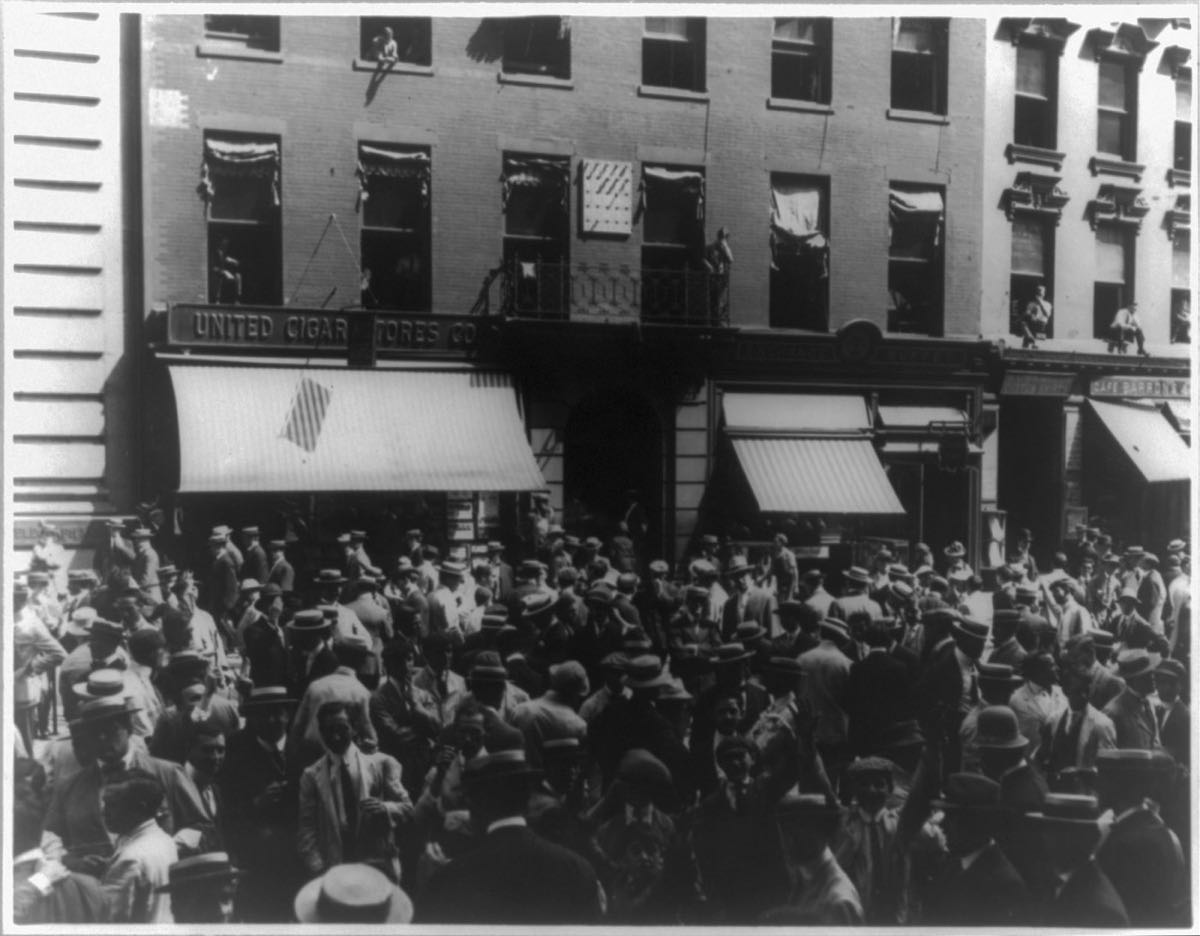
The shift
New York, 1916: the capital market was a crowd on a pavement.
Today billions of people open their first accounts on a mobile phone. The way into the economy no longer runs through a square, but through a phone.
Photograph: Curb market, New York. Library of Congress. Public domain.
Season 5 · Introduction
What is emerging global wealth?
Nine in ten Swedes have used Swish, the Swedish mobile payment app, in the past month. That is 91%, up from 82% in 2023. And the last time you shopped in a shop, you probably did not pay in cash: only 5 in 100 did in 2025, against 40% in 2010. In a short time the wallet has moved into the phone.
Now take a step back and imagine a country without bank branches and without cash machines on every corner. In large parts of the world there has never been a bank branch to go to and open an account. Even so, the share of adults in the world with an account, at an ordinary bank or with a mobile money service (a service where the account sits in the phone and is run by a mobile operator or a payment company instead of a bank), has risen to 79%, up from about 50% in 2011.
Hundreds of millions of people have opened their first account with a mobile phone in their hand, with no bank branch in sight.
Still, 1.3 billion adults in the world have no account, which means they are unbanked. But most of them already have the tool that could change that. About 900 million of these unbanked adults own a mobile phone, and 530 million of them have a smartphone, a phone that can run apps and use the internet. In other words, the phone is in the pocket long before the account is at the bank.
The same pattern shows up in saving. In developing economies, what the World Bank calls low and middle income countries, 10% of adults saved money through a mobile money account in 2024. That is five percentage points more than in 2021, up from 5% to 10%. Counting all saving in an account, at a bank or on a phone, 40% of adults in these countries saved in 2024, 16 percentage points more than in 2021 and the fastest rise in more than a decade.
What has already happened with Swish in your pocket is happening right now on a much larger scale elsewhere in the world. A phone screen does the job a bank branch used to do, for people who never had a bank branch to go to. That is part of what lies behind emerging global wealth: more people have, for the first time, a place to put their money.
Education, not advice.
The library
Five episodes.
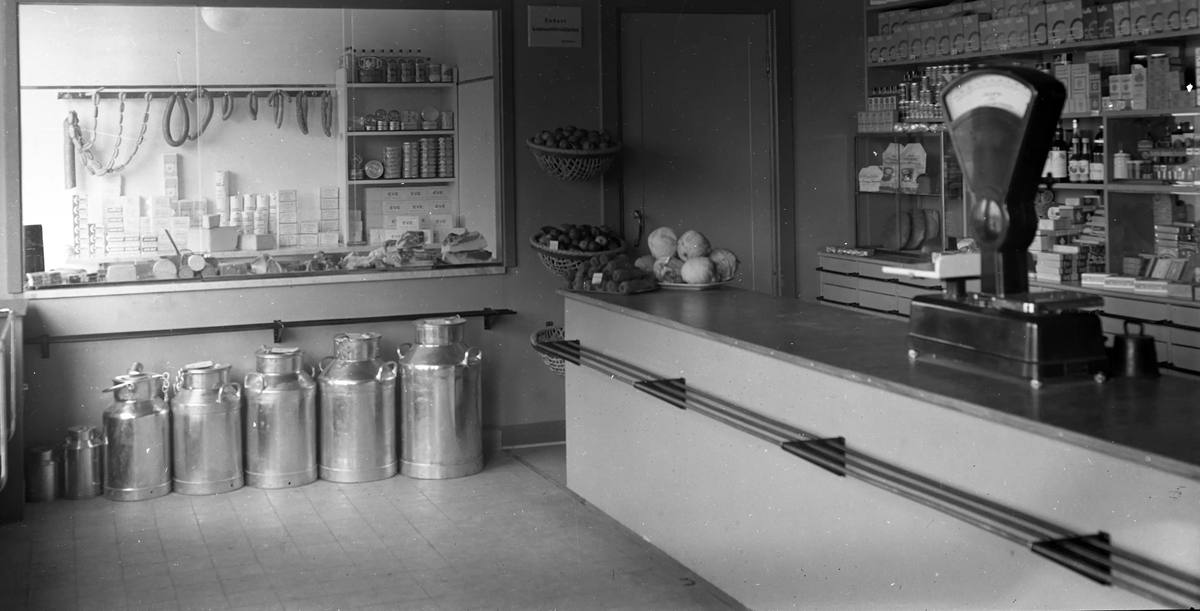
Caption and source
A grocer's shop in Växjö in the 1940s: counter, scales and milk churns. Payment happened here, over the counter, in notes and coins, and was complete the same moment. Photograph: Anton Persson. Kulturparken Småland / Småland Museum, ANPE0877. Public domain. Cropped.
Digital Payments
When you tap your card, a lot happens in less than a second. We explain how a payment works and why cash disappeared from Swedish shops.
How does a payment work, and why did cash disappear from the shops?
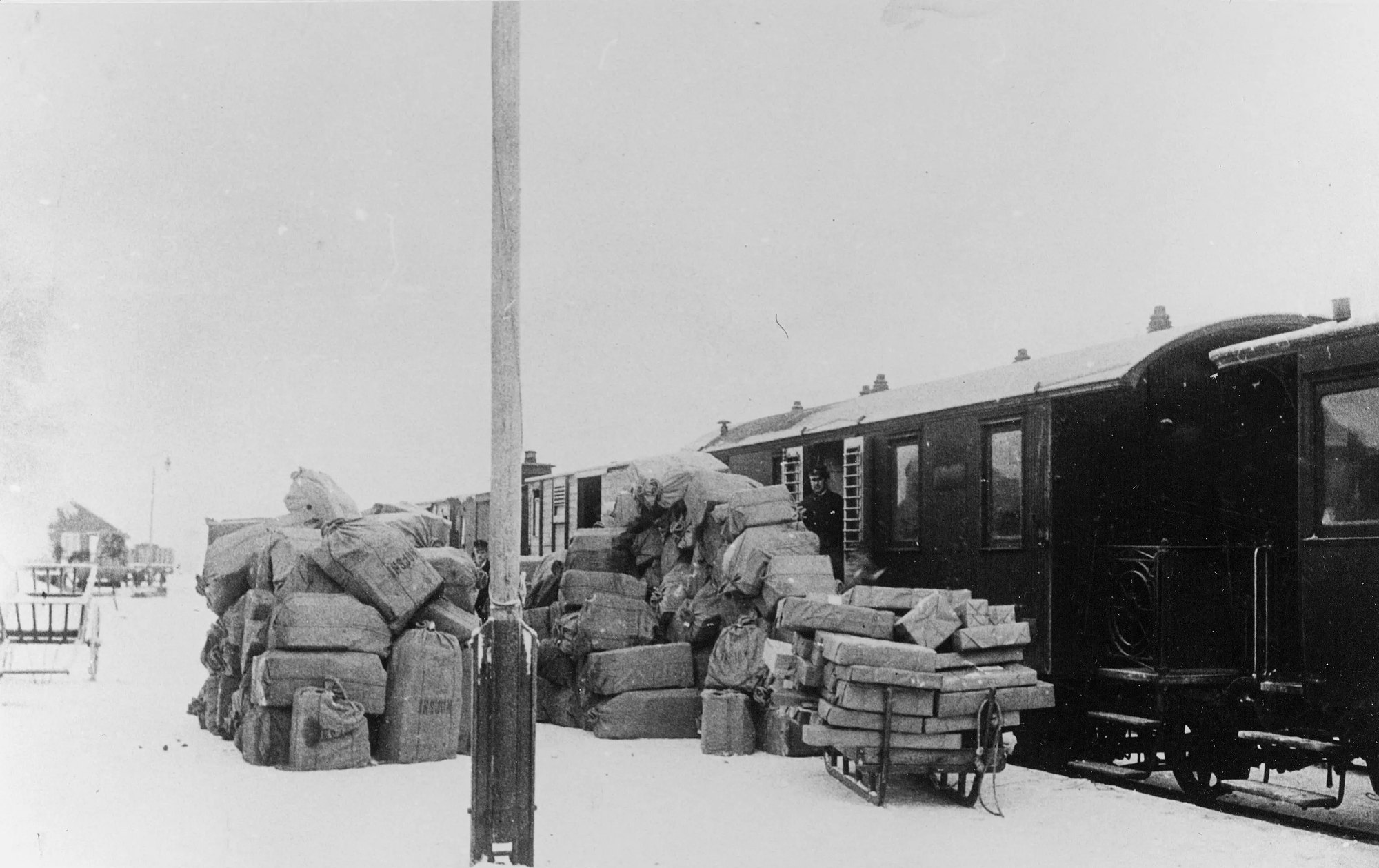
Caption and source
One day's outgoing post at the railway station in Insjön, 1909. According to the Centre for Business History, the local mail order company sent out more than a quarter of a million parcels the same year. Photograph: Per Olof Rosén, 1909. Postmuseum, POST.019077. Public domain.
E-commerce
E-commerce is buying things on a screen instead of in a shop. We explain what it looks like in Sweden, counted in parcels, and what happens after you click buy.
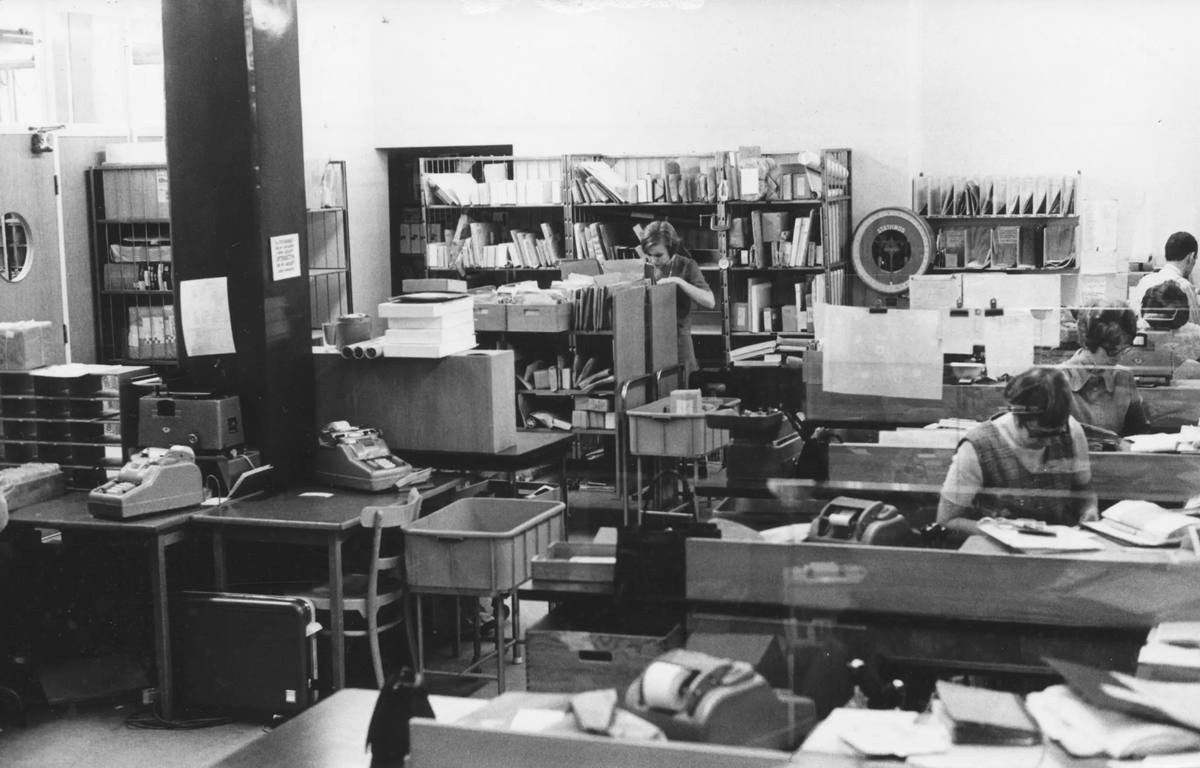
Caption and source
The post office in Jakobsberg during the Christmas rush, 1969. Before everyone had an account of their own, wages and bills were often handled over a post office counter like this one. Photograph: Yngve Hellström, 1969. Postmuseum, POST.053844. Public domain.
Financial Inclusion
Most people in Sweden take a bank account for granted, but not everyone in the world has one. We explain what an account is, what it is used for and who is left out.
Caption and source
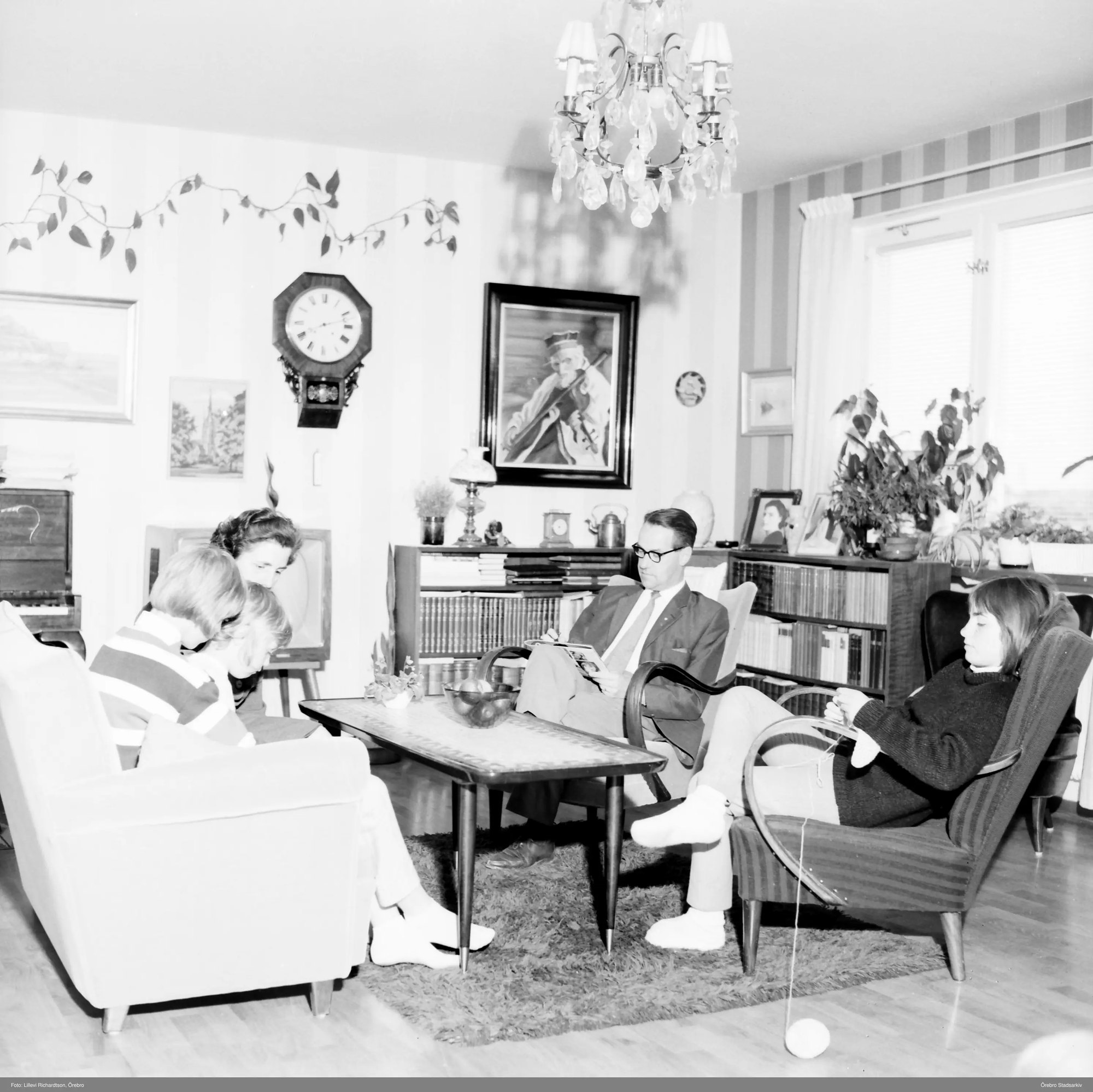
The Enbrant family in their living room in Baronbackarna in Örebro, dated 1960 in the archive record. The housing estate was built in the 1950s, in the same decades that Sweden began to measure the distribution of income systematically. Photograph: Lillevi Richardtson, Örebro. Örebro City Archives, SBK-BA-109. Licence CC BY.
The New Middle Class
Middle class is a term that is used often and defined rarely. We explain how economists measure it and what the statistics show about incomes in different countries.
Caption and source
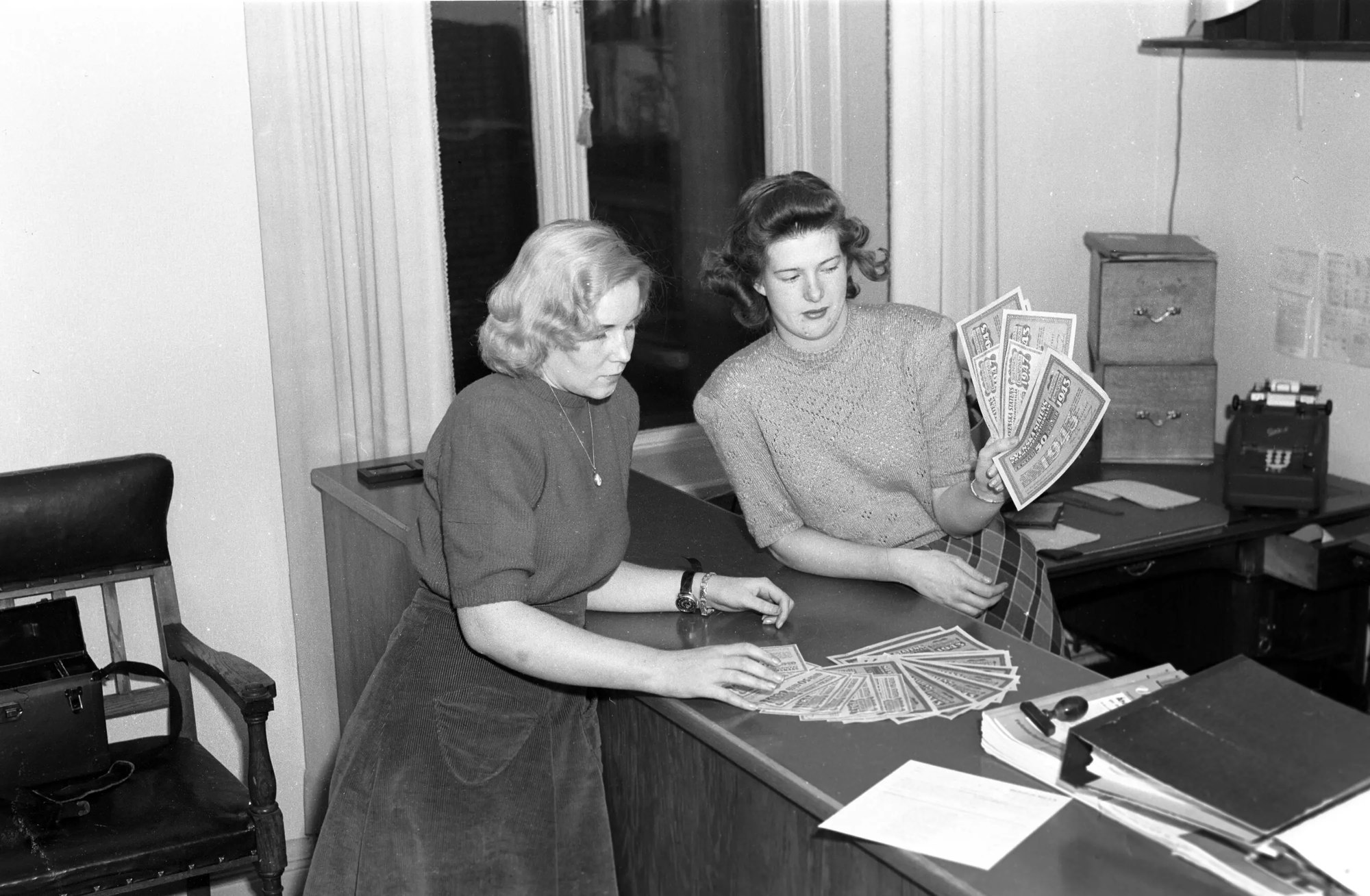
Buying bonds, photographed in Gävle in 1947. The bond market then consisted of printed paper counted by hand. Today the same holdings are entries in accounts at a single Swedish central securities depository. Photograph: Carl Larssons Fotografiska Ateljé AB. Gävleborg County Museum, XLM.CL009066. Public Domain Mark.
Emerging Capital Markets
A capital market is where companies and governments borrow money and where shares change hands. We explain how such a market is built and what separates a large market from a small one.
What is a capital market, and what separates a large one from a small one?
One article per episode. Subscribe and you will get every new article straight away.
The future in your inbox.
The most important things from each area, without the noise and without the hype.