OWN THE FUTURE · 03 OF 05
Rapid Urbanization
Millions of people move to cities every month. The infrastructure, the building and the systems that have to keep up.
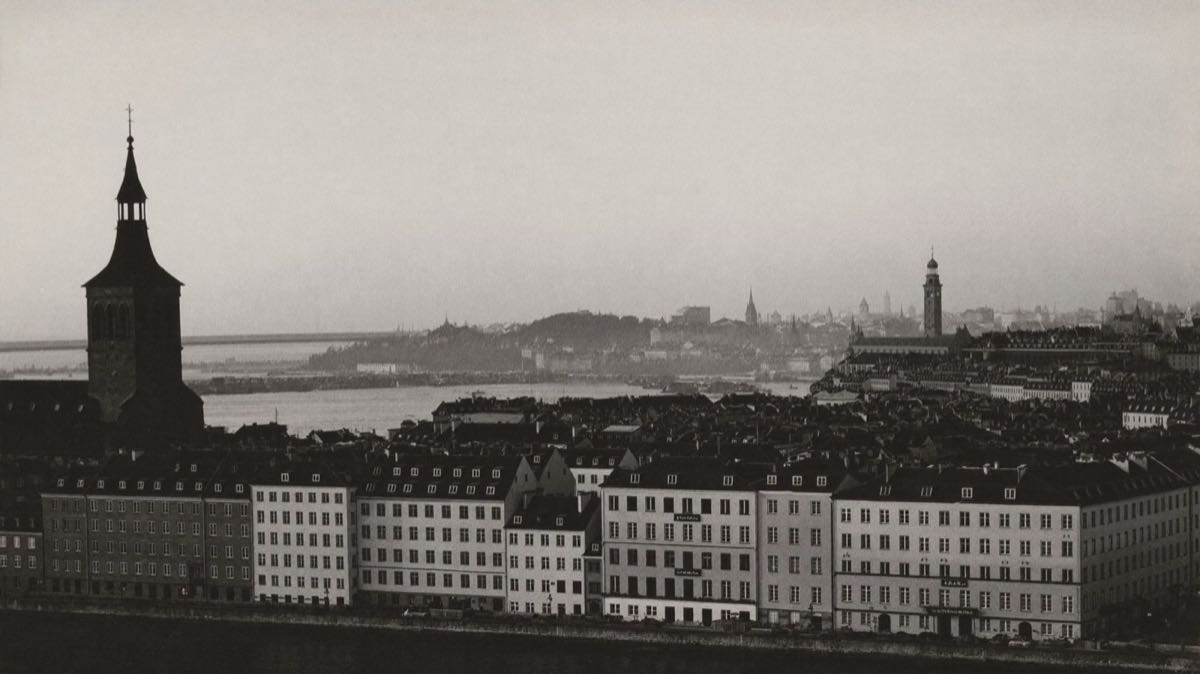
The shift
In 1960 a third of humanity lived in cities. Now it is more than half.
The world's cities grow by more than a million people a week. Housing, water, transport and energy have to be built at the same pace.
Source: UN, World Urbanization Prospects.
Season 3 · Introduction
What is rapid urbanisation?
Look out of the window. Do you see a crane, a new housing estate or a commuter rail station being extended? What you see is urbanisation in practice. The word means that people move from the countryside to cities and towns, and that those towns grow to make room for everyone moving in. In Swedish statistics, an urban area is a continuous built-up area with at least 200 inhabitants where the houses stand close together: no more than 150 metres between houses in the core. That means even quite small places count as urban areas.
Sweden has already made most of that journey. According to the UN Population Division, 72% of Sweden's population already lived in cities and towns in 1960. In 2023, 88% lived in urban areas, just over 9.2 million people, according to Statistics Sweden. So almost the whole country already lives in what the rest of the world is now in the middle of, and has done for a long time.
Globally the journey looks different, and it is not finished. In 1960, 34% of the world's population lived in cities, according to the same source. There the figure rests on each country's own definition of what a city is, so the global comparison is blunter than the Swedish one. By 2024 the share had risen to just under 58%. That is billions of people who, over just over sixty years, have moved from field and village to city blocks and tower blocks, in countries where it has to happen in much less time than it took in Sweden.
Sweden became an urban society early. Now the rest of the world is making the same journey, on a much larger scale.
What makes this movement hard to handle is pace and size at the same time. A growing city needs more than new addresses. It needs roads, water pipes, electricity, schools and ways to get to work, all built at the same pace as people move in. Build too slowly and you get overcrowding and queues. Build the wrong way and you get cities without working water or public transport. It is that crane outside the window, repeated millions of times all over the world, at the same time.
In this area we go through five parts of that building work: the infrastructure that holds a city together, the construction industry that has to raise it, the technology that runs it with data, the automation that keeps it going, and the transport that moves through it.
Education, not advice.
Sources
- Statistics Sweden (SCB), Tätorter i Sverige (Urban areas in Sweden), definition of a statistical urban area and an urbanisation rate of 88%, data for 2023, page updated 28 Nov 2024
- UN Population Division, World Urbanization Prospects, urban population as a percentage of total population, Sweden 1960 and 2024, retrieved via the World Bank's data bank on 2 Sep 2026
- The same series, world, 2 Sep 2026
The library
Five episodes.
Caption and source
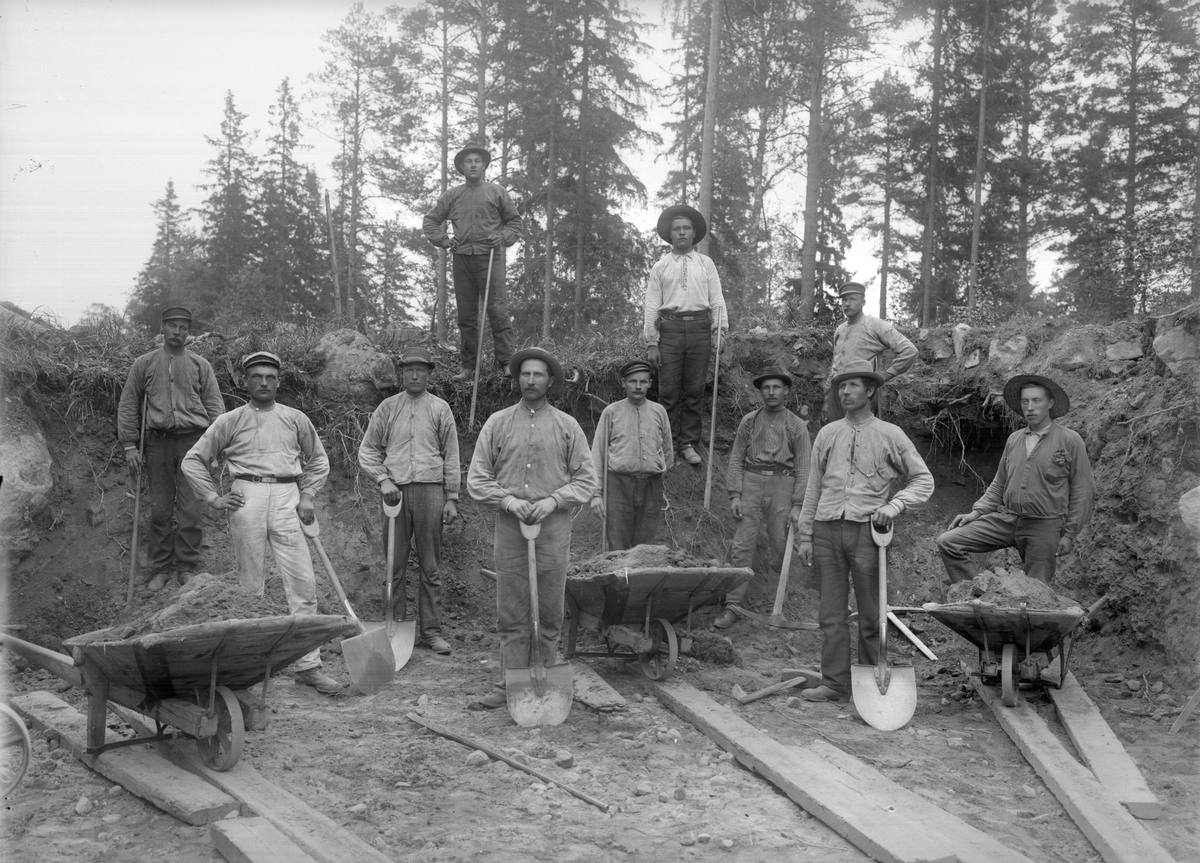
Railway navvies in a cutting on the line between Sala and Gysinge, 1898. Sweden's railway network was dug out by hand before it became 15,600 kilometres of track. Photograph: Anders Wilhelm Ljunggren, 1898. Swedish Railway Museum, JvmKADA00023. Public domain.
Infrastructure
Infrastructure is what we rarely think about until it stops working: roads, tracks, pipes and networks. We explain what it is made of and what it costs to put off maintenance.
Caption and source
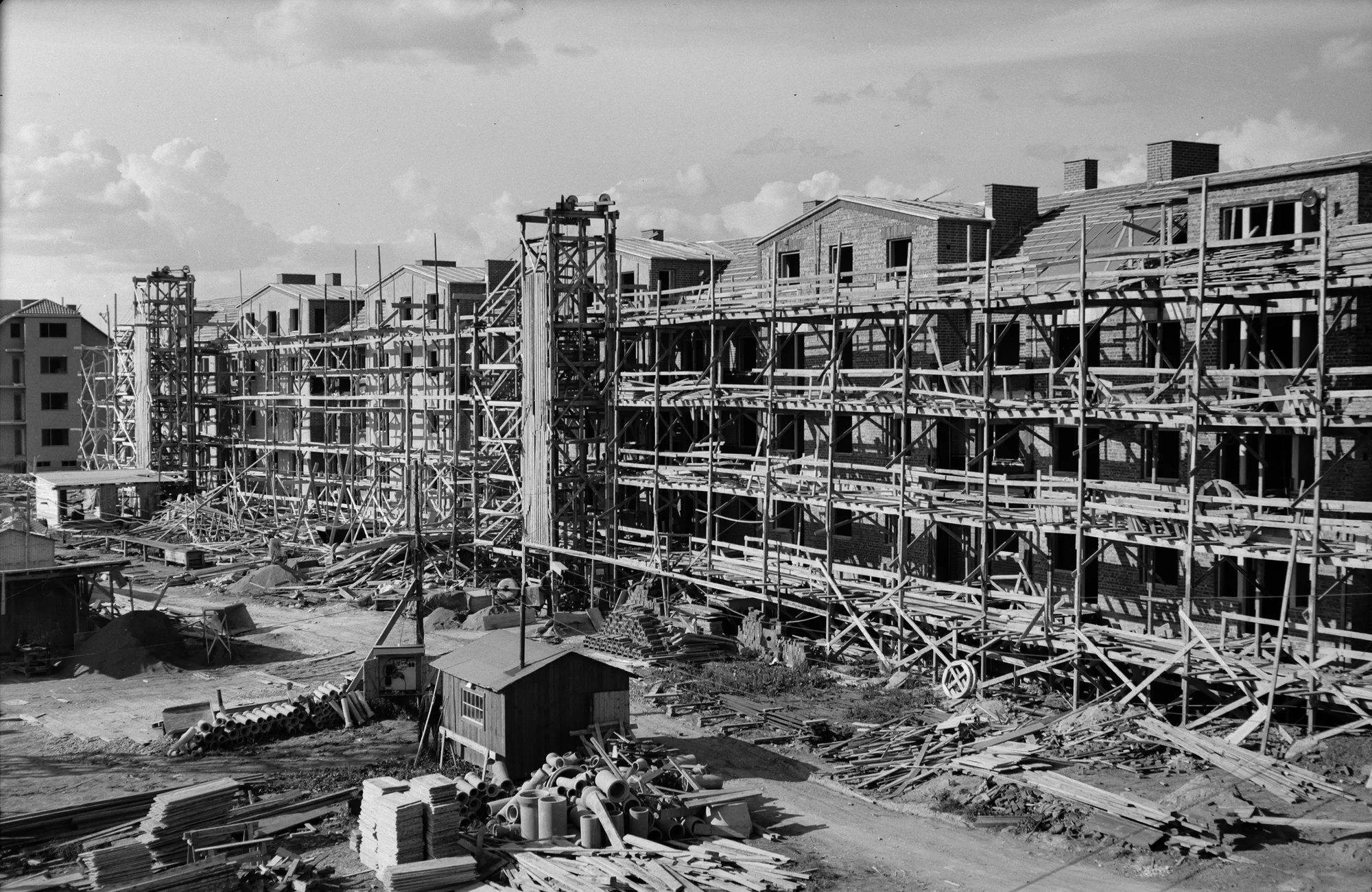
The housing at Tuna backar in Uppsala takes shape, 1948, the year after the Building Act of 1947 gave municipalities the right to decide where and when plans should be drawn up. In the record year of 1970, 109,843 homes were completed in Sweden. Photograph: Paul Sandberg, 1948. Upplandsmuseet, PS13322. Public Domain Mark.
Construction
A house starts as a drawing and a detailed development plan long before anyone pours a foundation. We go through how a city is built, step by step, and who decides what.
Caption and source
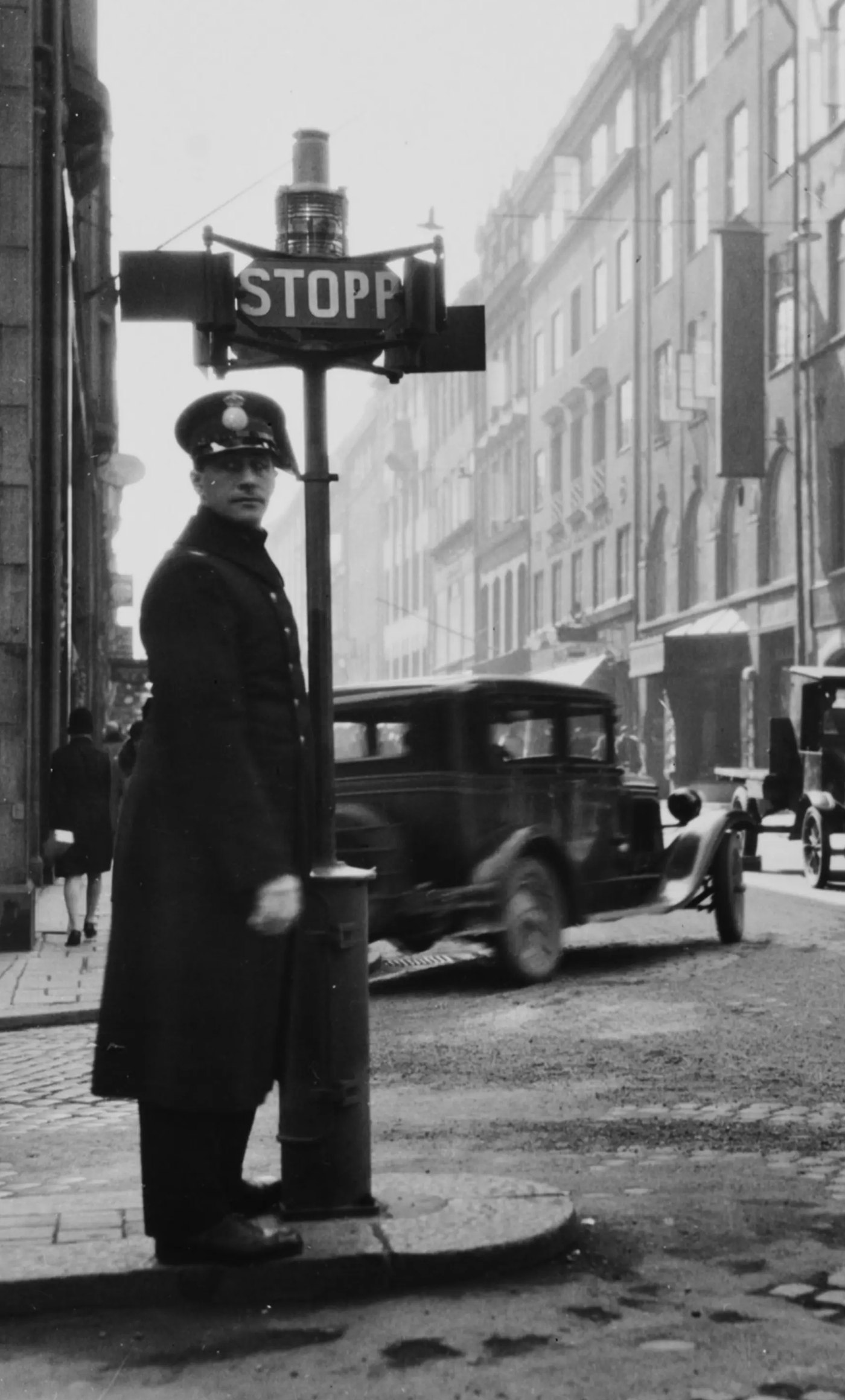
The Stop and Go traffic signal at the junction of Regeringsgatan and Hamngatan in Stockholm. The signal is a box with two windows, turned by hand by the man beside it. The museum record gives no date and no photographer; the vehicles in the picture are 1930s models. The image is cropped from the original. National Museum of Science and Technology (Tekniska museet), TEKA0016127. Public Domain Mark.
Smart Cities
A smart city uses sensors and data to manage traffic, lighting and rubbish. We look at what was promised ten years ago and which of the promises have been kept.
Caption and source
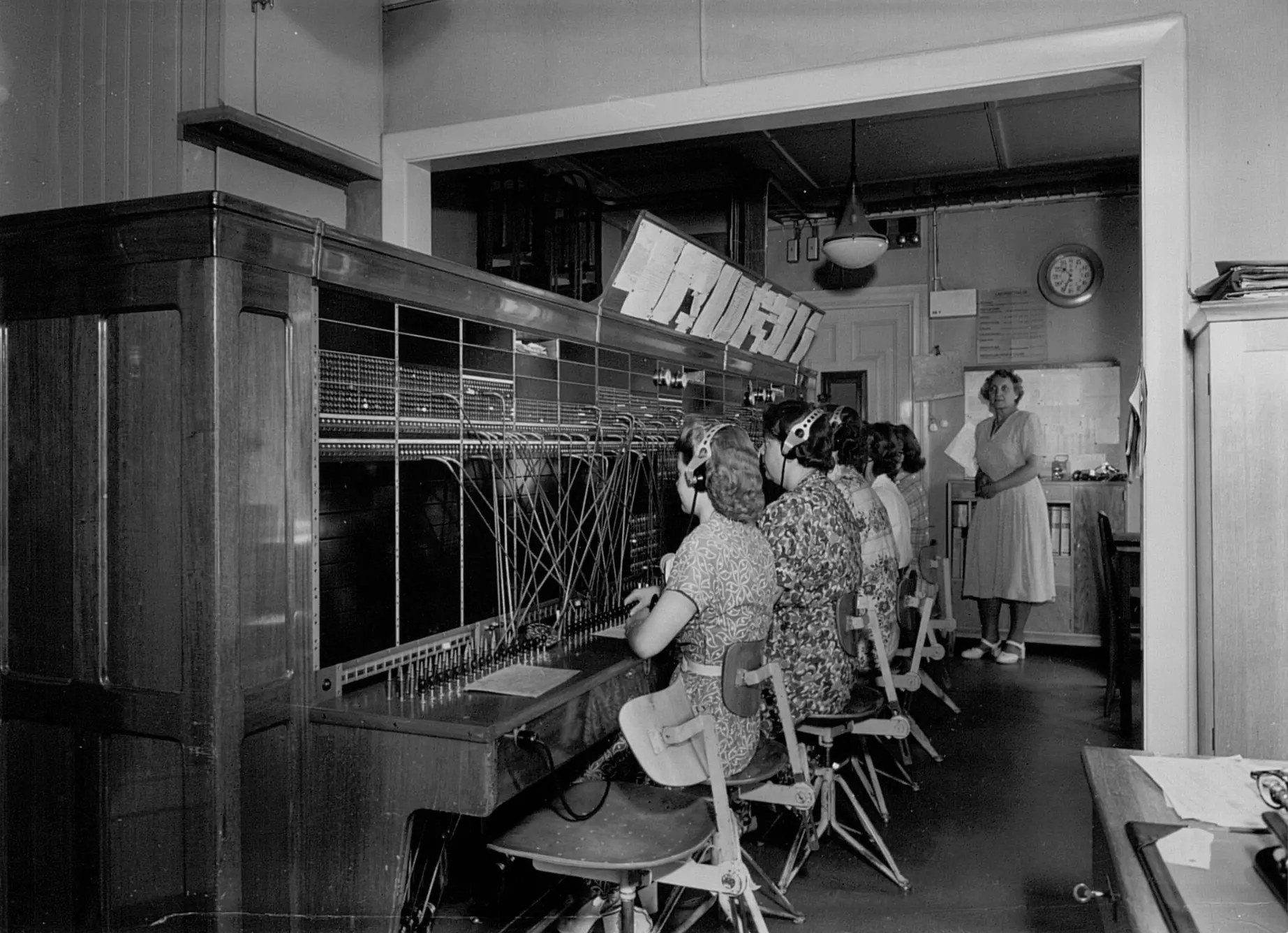
The telephone exchange in Vaxholm in 1951, with switchboards and telephone operators. Connecting a call was work a person did, and that a machine later did. The museum record names no photographer. National Museum of Science and Technology (Tekniska museet), TEKA0136394. Public Domain Mark.
Automation
Automation is when a machine does work that a person used to do. We explain where it has happened, what it did to jobs and how economists measure it.
Caption and source
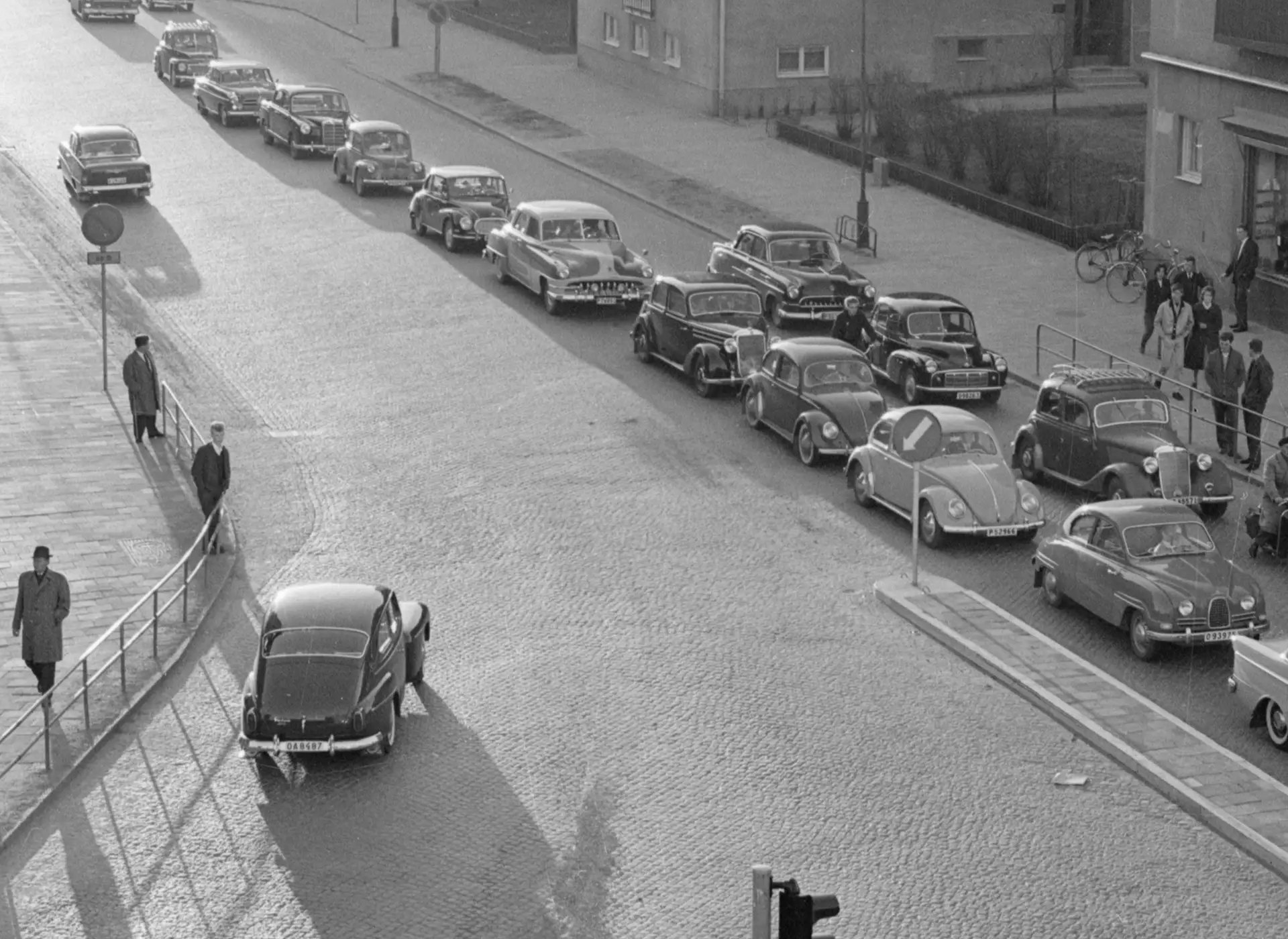
Queues of cars through Uddevalla, 1960. Seven years earlier the car alone had overtaken all rail traffic, counted in passenger kilometres. The traffic drives on the left, which dates the picture to before the switch on 3 Sep 1967. Photograph: Arne Andersson, 1960. Bohuslän Museum, UMFA53240:009924. Public Domain Mark. Cropped.
Transportation
Transport moves people and goods, and the way it is done has changed several times. We explain what the system looks like today, counted in journeys, freight and energy.
One article per episode. Subscribe and you will get each new article straight away.
The future in your inbox.
The most important things from each area, without the noise and without the hype.